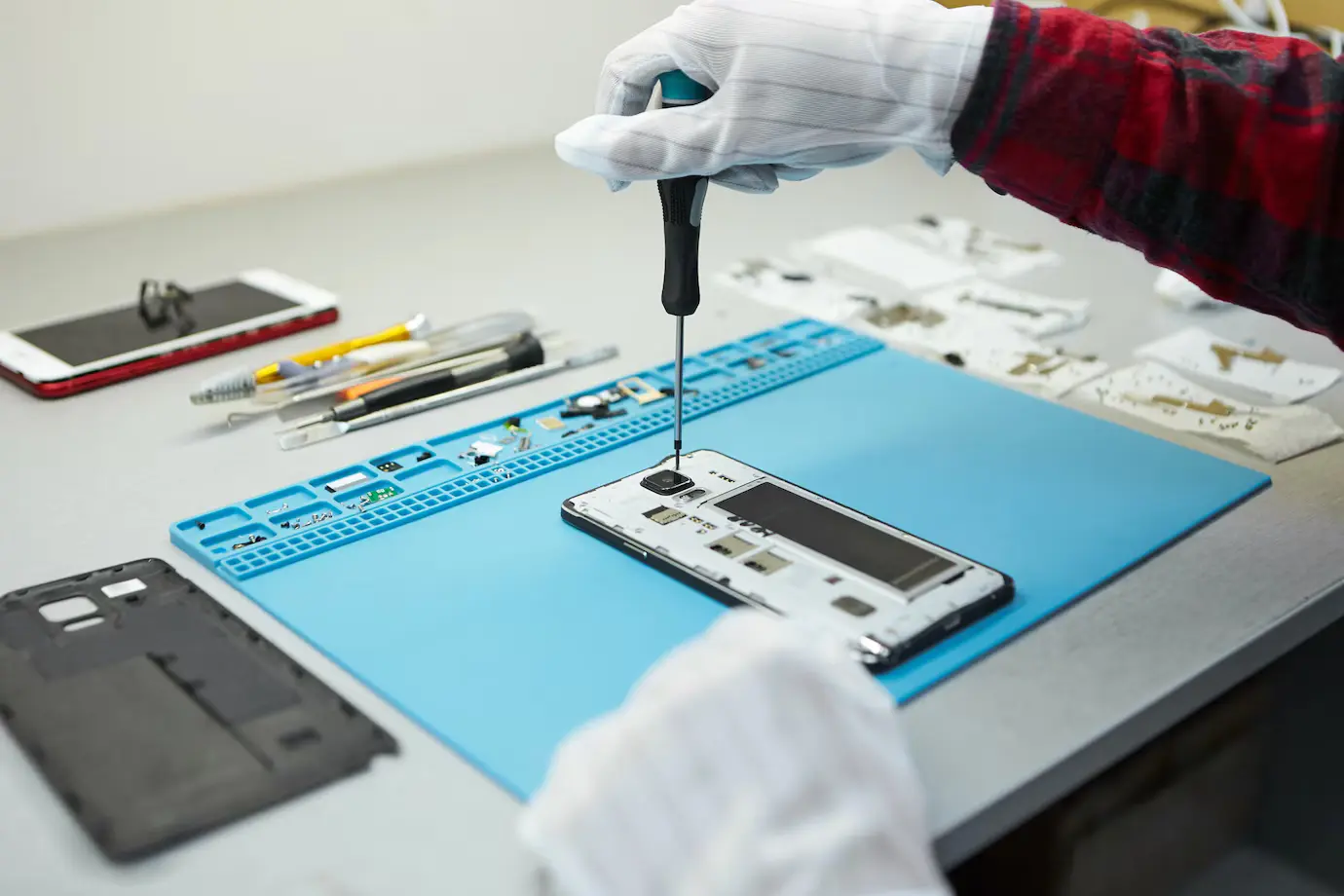

Identify the original accurately
Record the device’s exact model and the assembly identifier where documentation permits. A retail name can cover several revisions. Preserve a private job record without publishing customer serial numbers or account information.
Compare documented characteristics
Use the service information and reputable supplier specification to compare the proposed part. Note revision, connector arrangement and any required configuration or paired functions. Similar appearance and physical fit are incomplete evidence of compatibility.
Plan verification before installation
Write the functions that must be checked after the supported operation. If compatibility is uncertain, resolve the question before opening packaging or fitting the part. A screen that lights up may still require other agreed checks. Keep the source and identification with the job so a later issue can be traced without guessing which assembly was used.
The replacement fits but one function is missing
Physical fit did not establish complete compatibility. Revisit the identifiers and documented requirements before adding further changes. Preserve the observed limitation so a supplier discussion or qualified assessment can address the specific mismatch.
Your practice record
- Exact device and revision
- Original and proposed identifiers
- Unresolved compatibility questions
- Function checks planned
Repair procedures involve heat, electricity, fragile parts and customer data. Practise under qualified supervision and work only on devices you are authorized to service.