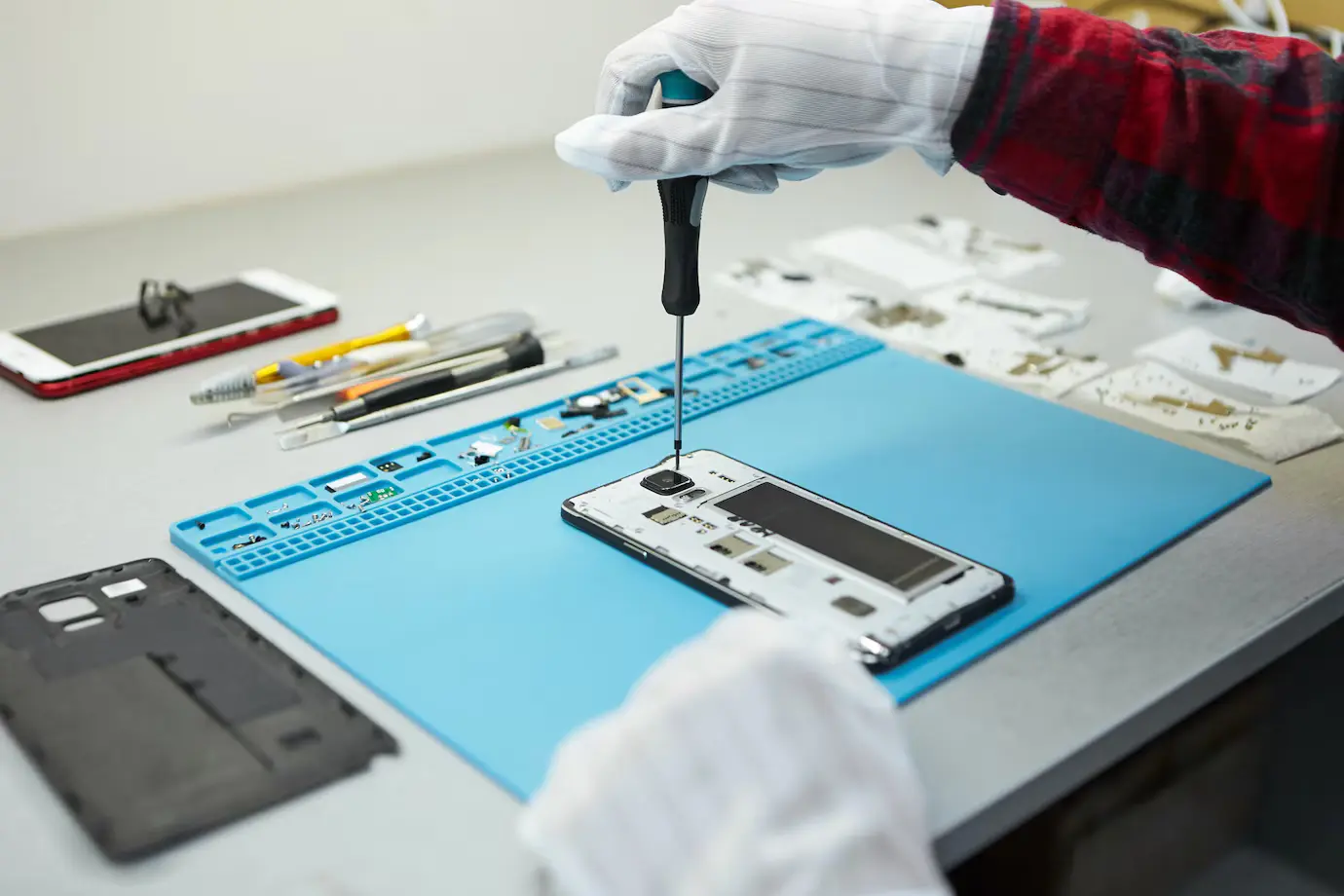
Identify the connector and the complaint
Locate the assembly using matching documentation. Ask which function fails and what evidence points to this connection. A connector near the suspected area is a candidate for inspection, not proof that it caused the symptom.
Inspect under approved conditions
Use the instructor’s power-isolation and handling procedure before viewing an internal connector. Record alignment, contamination or visible damage using suitable magnification. Do not bridge contacts with a metal tool or repeatedly press the assembly to see whether a symptom changes.
Connect the finding to a decision
Describe what is actually visible and what cannot be determined optically. If a supported reconnection or replacement is proposed, identify the reason and required checks. After work, verify the original function and relevant neighbouring functions; a connector appearing seated does not establish that the whole assembly is operational.
A connector looks seated but the function fails
Retain the inspection result and continue only with a supported diagnostic question. Visual seating and electrical performance are different observations. Repeatedly pressing an assembly without a plan can damage it while adding little evidence.
Your practice record
- Connector reference and function
- Approved preparation completed
- Observed condition versus hypothesis
- Functional checks after work
Repair procedures involve heat, electricity, fragile parts and customer data. Practise under qualified supervision and work only on devices you are authorized to service.